
Public discussion about antisemitism in the United States often produces two opposite reactions. Some believe catastrophe is impossible in a constitutional democracy; others fear that history may be closer than we wish to admit. A sober assessment requires holding both realities at once: the structural protections that make genocide extraordinarily difficult, and the social forces that can still place Jewish life under pressure.
An industrial genocide identical to what occurred in Europe in the 1930s and 1940s is highly unlikely in the United States. The country possesses entrenched constitutional limits on power, separation of governmental branches, decentralized law enforcement, independent courts, and a press environment that is vast and difficult to silence. American Jews are visible and integrated into every sector of society, and they are joined by large numbers of non-Jewish allies. These features complicate any attempt to build the centralized machinery required for systematic extermination.
Yet immunity is not the same as safety. Democracies remain vulnerable to mass radicalization, scapegoating, political repression, legal discrimination, extremist violence, and the erosion of shared norms. These developments have appeared in many societies that did not initially imagine themselves at risk. The existence of guardrails does not prevent them from being tested.
Current trends are troubling in part because antisemitism is rising from multiple ideological directions at once. On some segments of the political left, Jews are increasingly portrayed through dehumanizing narratives—described as colonizers or collective oppressors—and hostility toward Israel can blur into justification of aggression toward Jewish individuals or institutions. University environments, cultural spaces, and activist networks can become accelerators of these frames.
On parts of the political right, long-standing conspiratorial themes remain potent: ideas about Jewish control of finance or media, accusations tied to “globalism,” admiration for authoritarian or even Nazi imagery, and the growth of armed extremist movements. Digital ecosystems allow such ideologies to spread quickly and to recruit younger adherents.
History shows that when scapegoating merges with economic strain, polarization, distrust of institutions, and conspiratorial thinking, risk increases. These patterns have preceded episodes of mass persecution in many different places, including but not limited to Nazi Germany.
What, then, is the most realistic danger? Not deportation trains or gas chambers. The more plausible threats are forms of exclusion and intimidation that degrade security and civic belonging. Jews might find themselves pushed out of certain institutions or professions, facing harassment in public spaces, or encountering legal or regulatory barriers affecting communal life. Funding for protection could be reduced; schools or charities might be targeted; Jewish identity could be stigmatized under political labels. Over time, people may relocate because daily life feels unsafe. Variations of this pattern have unfolded in numerous countries without culminating in formal genocide.
Could circumstances deteriorate far beyond this? Only if several severe conditions converge: a collapse of democratic norms, the consolidation of national power by an extremist movement, deep economic crisis, widespread internal conflict, and the delegitimization of Jews as full citizens. The United States is not presently in such a state, though some indicators visible in public discourse move in worrisome directions.
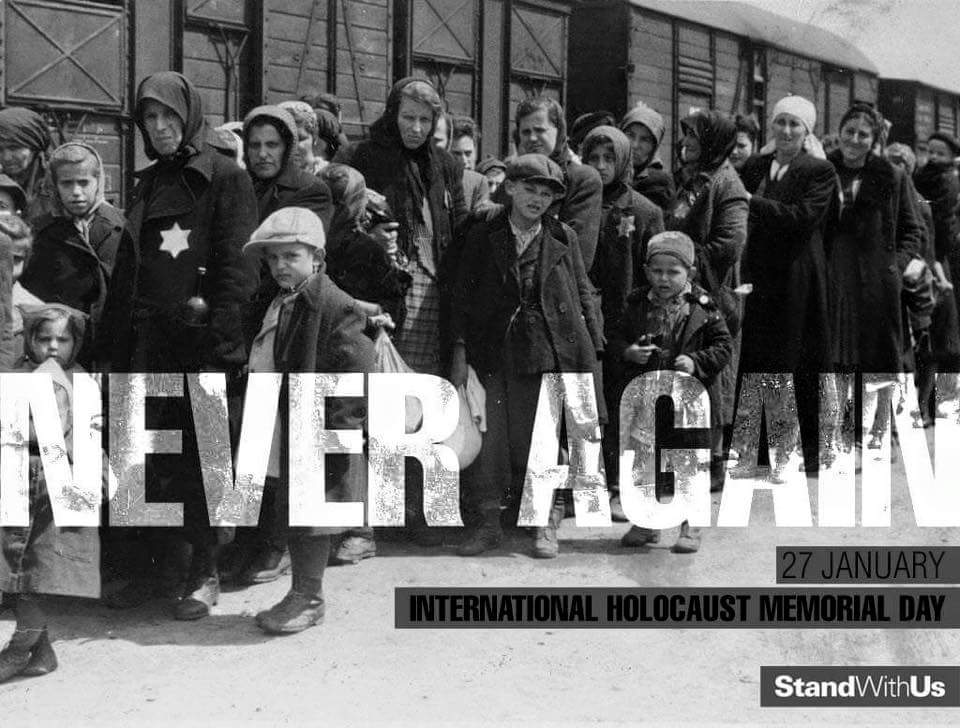
The most important historical lesson is that genocides do not begin with killing. They begin with language that dehumanizes, with propaganda that isolates, with harassment that becomes routine, and with political narratives that blame a minority for complex national problems. When such steps become normalized, later stages become easier to imagine.
At the same time, powerful counterweights remain. American Jewish communities are organized, resourceful, and politically engaged. Many millions of non-Jews reject antisemitism categorically. Federalism disperses authority across states. The military and judiciary are not unified around anti-Jewish ideology. Civil society, though strained, retains significant strength. Unlike the relative isolation faced by Jews in interwar Europe, American Jews are neither voiceless nor without allies.
An honest conclusion must therefore be twofold. A Holocaust-level annihilation is extremely unlikely under present conditions. A measurable deterioration in safety, comfort, and civil equality is entirely possible. Recognizing early warning signs is not panic; it is historical literacy. Awareness, combined with coalition-building and democratic resilience, remains the most effective defense.
An honest conclusion must therefore be twofold. A Holocaust-level annihilation is possible, but not likely. A measurable deterioration in safety, comfort, and civil equality is occurring now. Recognizing early warning signs is not panic; it is historical literacy. Awareness, combined with coalition-building and democratic resilience, remains the most effective defense.
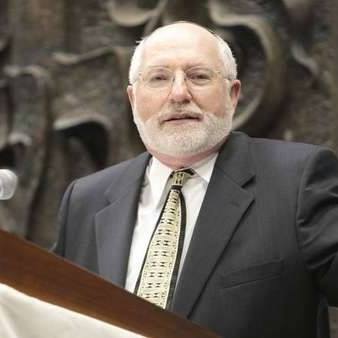
Rabbi Dr. Bernhard Rosenberg