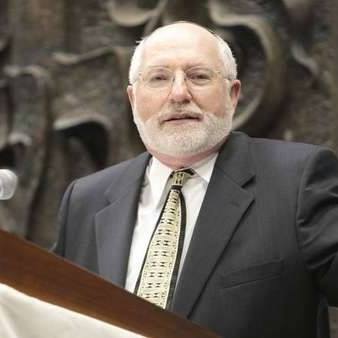





Rabbi Dr. Bernhard Rosenberg has been a persistent and outspoken critic of antisemitism at Rutgers University, shaped in part by his own experiences of harassment during his tenure there. An emeritus rabbi living in Edison, New Jersey, and a former Rutgers educator, he brings to his advocacy a distinguished academic background that includes rabbinical ordination and doctoral degrees from Yeshiva University, along with many years of teaching at Rutgers and other institutions.

While at Rutgers, Rabbi Rosenberg was reportedly harassed and threatened by a former student who used antisemitic slurs after receiving a B+ grade—an incident he says went unaddressed by both university leadership and Jewish organizations at the time. He has since spoken publicly about persistent antisemitism and anti-Zionism on Rutgers campuses, arguing that the muted institutional response reflects a broader problem of political correctness and administrative silence. His activism is further grounded in his family’s history as Holocaust survivors and his long-standing commitment to confronting antisemitism through writing, public speaking, and media engagement.
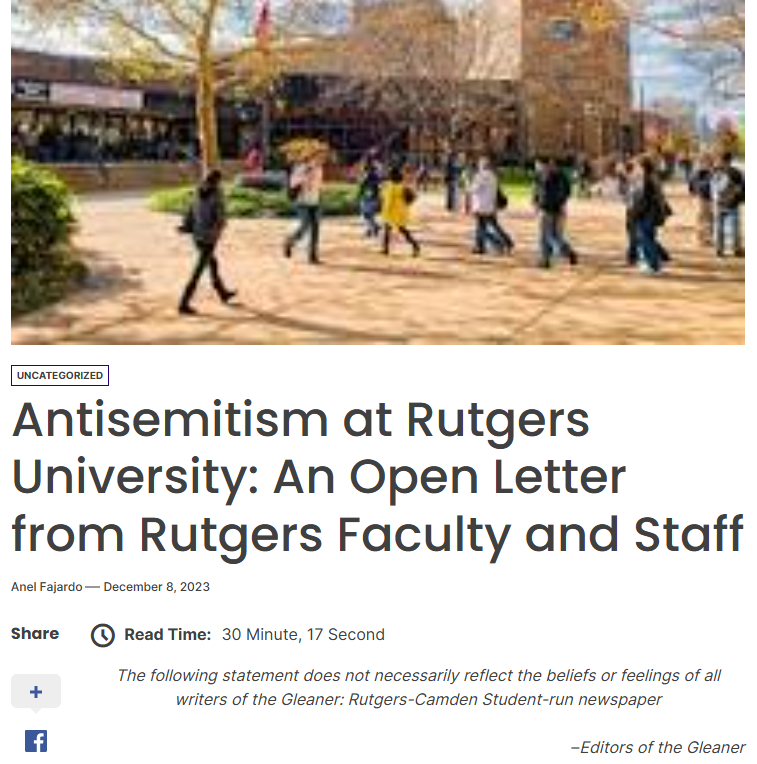
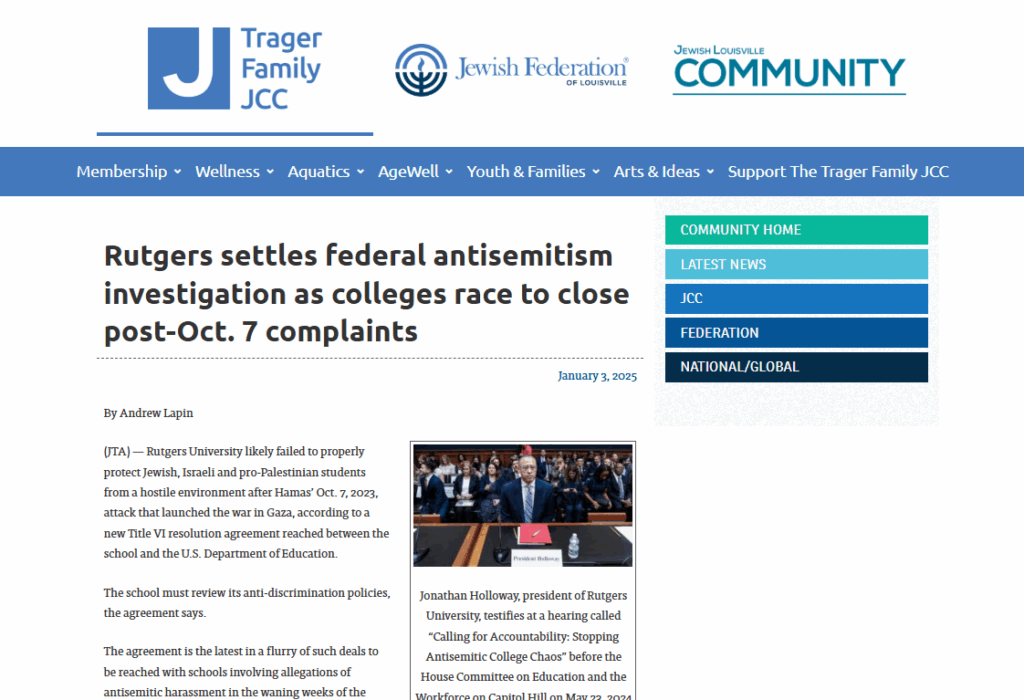
In recent years, Rutgers University has faced broader allegations of antisemitism, especially following the October 7, 2023 Hamas attacks in Israel. Jewish and Israeli students have reported threats, harassment, vandalism targeting Jewish fraternity houses, and hostile incidents connected to anti-Israel demonstrations. These concerns prompted federal investigations under Title VI of the Civil Rights Act, which prohibits discrimination in federally funded institutions. The U.S. Department of Education concluded that Rutgers likely permitted a hostile environment based on national origin and failed to adequately address antisemitic behavior. As a result, the university entered agreements to strengthen its policies, expand staff and student training, conduct campus climate assessments, and improve protections against hate and discrimination.
Members of the Rutgers faculty and administration have publicly condemned antisemitism and called for comprehensive measures to ensure safety and respect on campus. These efforts acknowledge the significant impact that antisemitism has had on the Rutgers community and the need for institutional accountability.
Rabbi Rosenberg’s courage and willingness to speak out exemplify the type of leadership needed to confront these challenges. He argues that truth and decisive action are essential, maintaining that silence or appeasement only encourages further hatred. His experience highlights both the personal and systemic dimensions of combating antisemitism within academic institutions today.
In sum, Rabbi Dr. Bernhard Rosenberg remains a prominent voice in the fight against antisemitism at Rutgers University. His personal story underscores the urgency of sustained, transparent, and effective responses from both university leadership and the broader community.